
Programmes > Women in Film & Photography > Women in Film & Photography 2026: Artists-in-Residence
Women in Film & Photography 2026: Artists-in-Residence
08/09/2026 - 07/11/2026
From 8 Sep to 7 Nov 2026, we welcome our three Artists-in-Residence: Alia Alkaff, Jun!yi Min, and Lizzie Wee. Over two months, they will develop projects exploring the theme of Rituals, concluding with an Open Studio.
Follow along as we share their residency journeys and stay tuned for more details!
Alia Alkaff
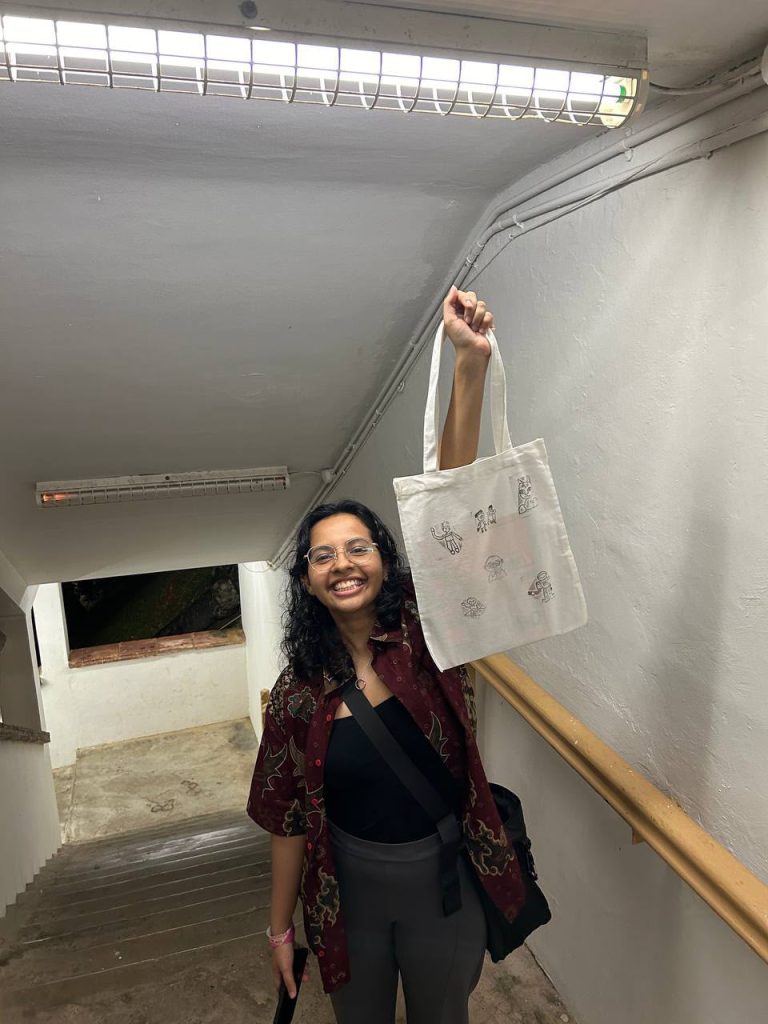
Alia Alkaff (she/they/he) is a writer-director and performer for stage and screen, whose practice has expanded to include multimedia design and prop-making. Storytelling has been at the centre of her work since she first wrote storylines for long-running television drama Tanglin. She has since developed a body of work that moves fluidly across forms and disciplines. For films, her work was screened at the Viddsee Juree Awards 2023, National Youth Film Awards 2023, and the 43rd Porto International Film Festival.
Recent theatre credits include director and sound designer for The Last Singapore Girl (part of SOLO/ORAY AAL Season 3, a collection of monologues at SIFAS Annexe), and playwright for Mee Soto, her contribution to the anthology production All You Can Eat presented at Wild Rice. She recently completed a residency with The Artground as part of the Groundbreakers programme with Jet Kids, a theatre-for-young-audiences collective – one she co-runs with her siblings. Their passion lies in crafting accessible narratives exploring identity, loss, and hope with a dash of humour.
About Alia’s project
A performer’s process does not start or end with the stage. Before the audience even enters the venue, the performer prepares. Alia’s project seeks to explore and dive into the rituals done by performers before they step onto stage. How does a performer center oneself? Who did they learn this from? Which discipline was this knowledge pulled from? Through cataloguing audio, movement and breath, this project hopes to draw connections between performers beyond disciplines and background.
Jun!yi Min
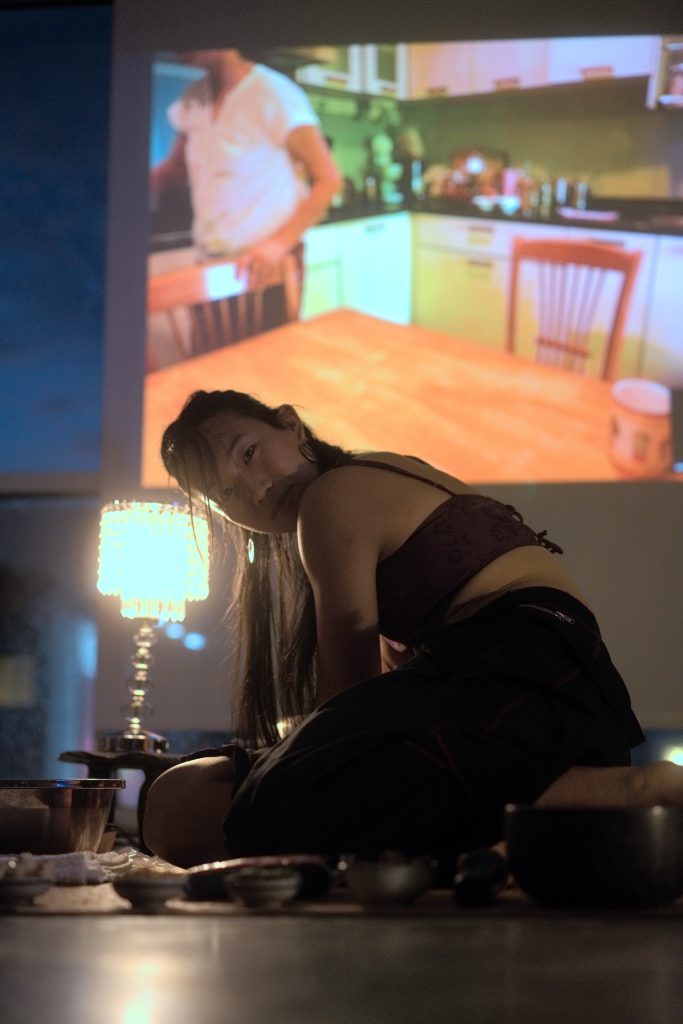
Jun!yi Min is an international performance artist, experimental filmmaker, and archivist from Singapore. She graduated from her MFA in Visual Arts at University of California San Diego in 2024 focusing on performance and video installation. Jun works with mundane gestures to create a poetic friction that disrupts and signals to the absurdities lying within the everyday.
She has performed, screened, and exhibited across Southern California and New York, notably at Mingei Museum, Best Practice, Bread and Salt Gallery, A Space Gallery, Millennium Film Workshop, and at the MoMA. Most recently, her film Our Belly is a Mirror was shown in Bad Lament (G.U.C Gallery, Seoul, South Korea) curated by Minseon Kim and Sam Blumenfeld exploring queer grief rituals. She is currently a resident at the Black, Indigenous, & Trans of Color Histories Lab archiving the lives of transfeminine performers through film.
About Jun!’s projectHormonal Affinities is a weekly ritual that Jun! began in 2024 where she asked her queer family to photograph her every time she performs a hormone injection as part of her hormone replacement therapy. By elevating the mundane, repetitive work of taking estrogen into familial ritual, she highlights the communal and labor-intensive dimensions of gender transition that trans women experience. The project ran for close to two years across San Diego and New York and came to a hiatus when she returned back to Singapore in 2026. During those two years, the ritual became a way of processing grief and disorientation from the ruptures in time and place she was experiencing transitioning between gender and land.
Lizzie Wee
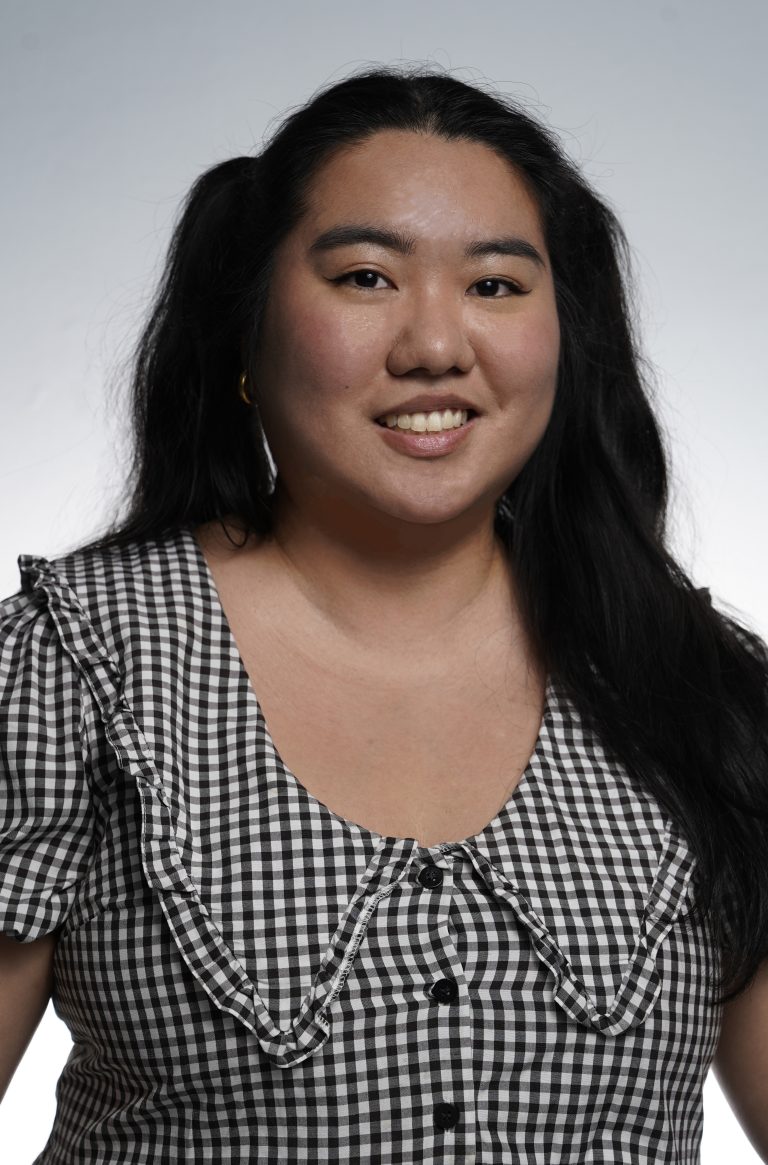
Increasingly, her work has focused on themes of heritage, folklore, and intangible cultural practices, exploring how memories and beliefs are transmitted across generations and embedded within places. Through research-driven and community-oriented projects, she seeks to uncover overlooked narratives and create spaces for dialogue between history, lived experience, and contemporary culture.
Wee has presented her work internationally in exhibitions, symposiums, showcases, and art fairs across Singapore, Malaysia, Taiwan, China, Poland, South Africa, and the United States. Outside her artistic practice, she has worked with Sotheby’s Hong Kong, Kitchen Hoarder, Pure Art Lab, and co-founded the interdisciplinary collective Multihyphen8 with Bridget Tay.
About Lizzie’s project
Faith Healing extends Wee’s ongoing research into luck, superstition, and belief systems by examining the relationship between Traditional Chinese Medicine (TCM), ritual practices, and inherited knowledge. Through the medium of video, the project explores why people continue to place faith in rituals, and how they remain meaningful in contemporary life. Filming at her family’s ancestral temple, Guanyin Gong Vegetarian Hall at Cuff Road, Singapore, and a TCM clinic in Taipei where she receives treatment, the research traces connections between medicine, spirituality, and cultural memory. Although TCM is now widely accepted as healthcare, its origins are rooted in cosmological ideas of balance, energy, and the unseen.
Faith Healing explores the porous boundary between medicine and magic, where belief and healing is collectively constructed through oral traditions and inherited rituals and superstitions, highlighting the parallels of seeking treatment for ailments of the body versus the soul within the artist’s own phenomenological experience.